

Freedom, Love, and the Space Between: Navigating Matters of Conscience in the Church
There is a particular kind of tension that exists inside Christian community -- one that does not come from obvious moral failure or doctrinal heresy, but from the quiet friction of two sincere believers living out their faith differently. One person drinks wine at dinner and gives thanks to God for it. Another cannot touch a drop without it pulling them back toward a life they barely escaped. One person celebrates a holiday with their family, finding ways to redeem it for the sake of their children. Another refuses to participate at all, convinced their conscience will not allow it. Both are trying to honor God. Both are convinced they are right.
Romans 14 steps directly into this tension, and what it offers is not a tiebreaker. It is something far more useful -- a framework for love.
The Categories That Shape the Conversation
Before we can talk about how to love one another through disagreement, we need to understand what kind of disagreement we are actually having. Not every conflict inside the church is the same. Some things are settled. The resurrection of Jesus, salvation by grace through faith, the authority of Scripture -- these are not matters of personal preference. They are the fixed ground on which everything else stands.
But there is another category. Paul calls them "disputable matters" -- sometimes called matters of conscience. These are areas where Scripture does not draw a sharp, unambiguous line, where sincere and Spirit-filled believers have looked at the same text and landed in different places. Paul's original audience was wrestling with whether it was permissible to eat meat that had been sacrificed to pagan idols, and which day of the week was most sacred. The specific questions have changed, but the principle has not. Every generation of believers finds its own version of these disputes.
The critical skill is knowing which category you are in. When God has spoken clearly, the answer is obedience. When the matter is genuinely one of conscience, the answer is something more nuanced -- and more demanding.
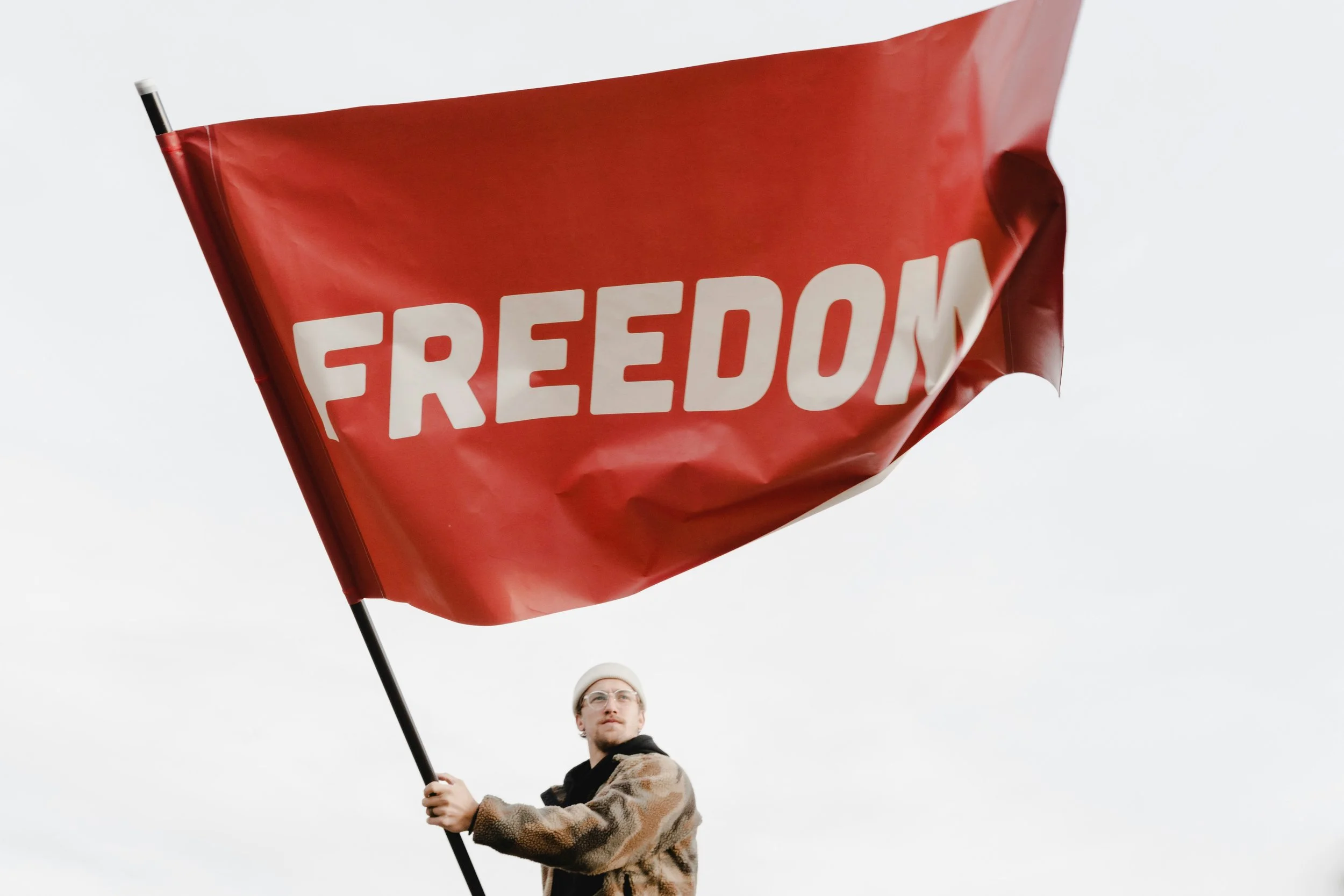
What Are You Free For?
There is a question that does not get asked nearly enough in conversations about faith and freedom: not "what are you free from?" but "what are you free for?" Most of us understand, at least in part, that the gospel offers liberation. Liberation from guilt, from shame, from the crushing weight of trying to earn what can never be earned. But freedom is never just an absence of something. It is always an invitation toward something.
Romans 12 is where the apostle Paul makes that invitation unmistakably clear.
The Foundation Beneath the Call
Paul opens Romans 12 with a single word that demands attention: "therefore." It is a hinge word, a word that swings the entire letter in a new direction. Everything Paul is about to say rests on everything he has already said. Eleven chapters of theology, mercy, grace, and the relentless pursuit of God toward humanity all funnel into this moment.
In view of God's mercy, Paul writes, offer yourselves.
That phrase, "in view of God's mercy," is not decorative. It is load-bearing. The Christian life does not begin with what we do for God. It begins with what He has already done for us. We were sinners, and He came anyway. We rejected Him, and He pursued anyway. We tried to manufacture our own righteousness, and He provided it freely through faith. We were slaves to sin, and He set us free. Not someday. Not conditionally. Now, and completely.
That is the foundation. And it matters enormously, because without it, everything that follows in Romans 12 starts to feel like a burden rather than a response. Obedience divorced from grace becomes religion. Obedience rooted in grace becomes worship.

The Sacred Table: Rediscovering the Power of Communion
In a world filled with rituals that have lost their meaning, there exists one practice that has the power to transform us completely—if only we would approach it with the reverence it deserves. Communion, the Lord's Supper, the Eucharist—whatever name we know it by—this sacred moment was never meant to be a meaningless add-on to our spiritual lives. It was designed to be a living encounter with Jesus himself.
When the Extraordinary Becomes Ordinary
Somewhere along the journey of church history, we've allowed something extraordinary to become ordinary. We get excited about worship music, anticipate powerful sermons, but when it comes to communion, we often approach it with casual indifference. We go through the motions, our hearts disconnected, our minds wandering.
Yet consider this: Jesus himself, knowing everything that awaited him—the betrayal, the suffering, the cross—said with deep emotion, "I have eagerly desired to eat this Passover with you before I suffer." With everything ahead of him, his desire was to sit at the table with his people. That should stop us in our tracks.
The early church understood something we've forgotten. Their gatherings revolved around the Lord's table. They didn't view communion as something to squeeze into a service; it was the center of their worship. They believed Jesus was truly present among them, that they weren't just remembering him but actually communing with him.