

What Does It Actually Mean to Love Like Jesus?
Love is one of the most talked-about topics in the world, and yet it remains one of the most misunderstood. We throw the word around casually, attach it to preferences and feelings, and quietly reserve it for the people who make it easy. But what if genuine love — the kind that transforms communities, disarms enemies, and reflects the heart of God — looks radically different from what we have settled for?
Romans 12:9-21 lays out one of the most challenging and practical pictures of love found anywhere in Scripture. It is not a soft, sentimental portrait. It is a call to something costly, something counter-cultural, and ultimately something that is only possible through the power of God working in us.
Love Without a Mask
Paul opens with a striking command: let love be sincere. The Greek word he uses literally means without hypocrisy. In the ancient world, the word hypocrite was borrowed from the theater, where actors would hold up masks to portray different characters. Paul is essentially saying, do not wear a mask of love while hiding something entirely different underneath.
This is a word that cuts deep. It is possible to say the right things, smile at the right moments, and still harbor bitterness, jealousy, or contempt beneath the surface. Hypocritical love is transactional — it gives in order to receive. It is conditional — it extends warmth only to those who agree, who behave, who belong to the right group. It is situational — it shows up when convenient and disappears when things get hard.
The contrast Paul draws is the agape love of God. This is not the romantic love of eros, nor the friendship love of philia, nor the family affection of storge. Agape is selfless, sacrificial, and unconditional. It is not primarily driven by emotion or attraction, but by will and commitment — choosing to act for someone else's good regardless of what comes back in return. This is the love God demonstrated when He gave Himself for us. And it is the love He calls us to walk in daily.

The Sacred Table: Rediscovering the Power of Communion
In a world filled with rituals that have lost their meaning, there exists one practice that has the power to transform us completely—if only we would approach it with the reverence it deserves. Communion, the Lord's Supper, the Eucharist—whatever name we know it by—this sacred moment was never meant to be a meaningless add-on to our spiritual lives. It was designed to be a living encounter with Jesus himself.
When the Extraordinary Becomes Ordinary
Somewhere along the journey of church history, we've allowed something extraordinary to become ordinary. We get excited about worship music, anticipate powerful sermons, but when it comes to communion, we often approach it with casual indifference. We go through the motions, our hearts disconnected, our minds wandering.
Yet consider this: Jesus himself, knowing everything that awaited him—the betrayal, the suffering, the cross—said with deep emotion, "I have eagerly desired to eat this Passover with you before I suffer." With everything ahead of him, his desire was to sit at the table with his people. That should stop us in our tracks.
The early church understood something we've forgotten. Their gatherings revolved around the Lord's table. They didn't view communion as something to squeeze into a service; it was the center of their worship. They believed Jesus was truly present among them, that they weren't just remembering him but actually communing with him.
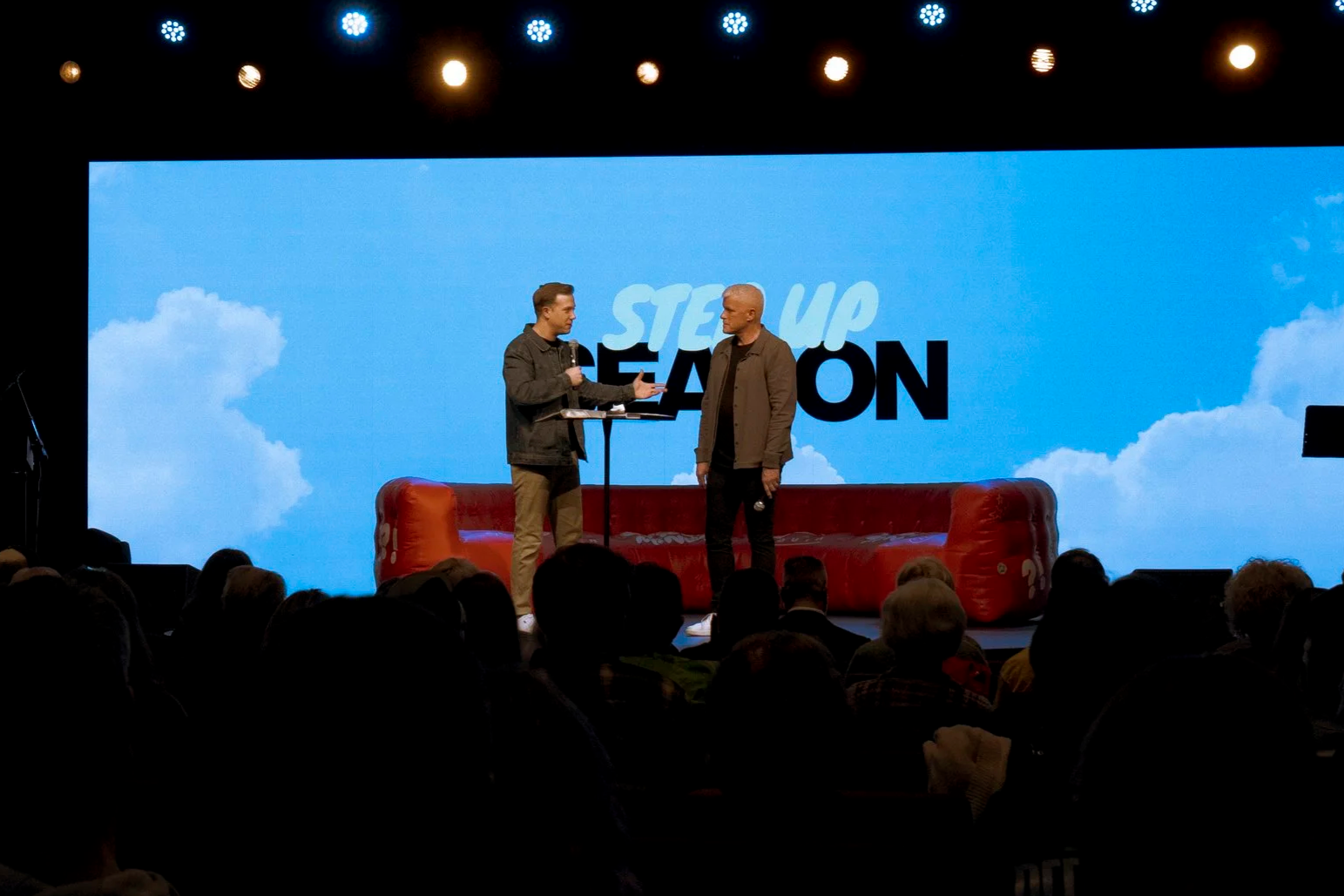
A Season of Stepping Up, Stepping In, and Stepping Out
There are moments in life that feel less like endings and more like beautiful new beginnings. Times when what appears to be a transition is actually a divine orchestration—a carefully crafted plan that's been unfolding for years. Today, we're exploring what it means to embrace change with faith, to pass the baton with grace, and to step boldly into the freedom God has prepared for us.