
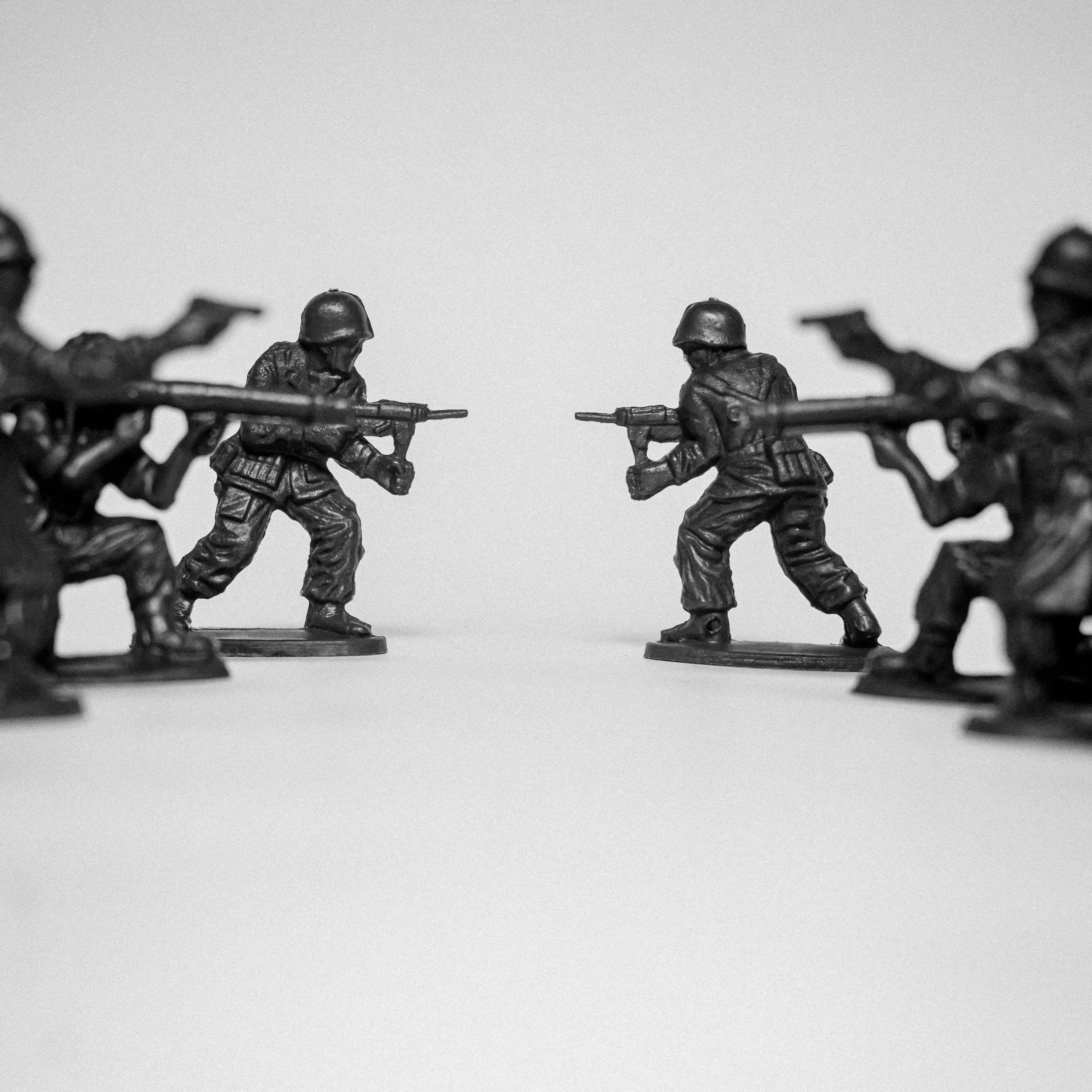
The War Within: Understanding Our Battle with Sin
Have you ever found yourself asking, "Why did I do that?" or "Where did that thought come from?" Whether it's a parent confronting a child who can only respond with "I don't know," or an adult reflecting on a broken promise to themselves, we all experience this mysterious pull toward actions we claim to hate.
Perhaps you started the year vowing to read your Bible daily, only to find yourself back to mindless scrolling. Maybe you promised yourself you'd finally break free from that habit, control your temper, or stop looking at those images. Yet here you are again, asking yourself: "What is wrong with me? Why does this keep happening?"
The Law Exposes What Was Already There
The book of Romans provides a profound answer to this question. When Paul addresses whether the law itself is sinful, he responds with emphatic clarity: "Certainly not!" The law—God's word and commands—isn't the problem. Rather, it exposes the sin that already dwells within us.
Think of it like sunlight shining on a garden. As the warm, life-giving rays illuminate the ground, they awaken something that has been dormant beneath the surface: weeds. Did the sunlight create the weeds? No. Did the sunlight cause them to exist? No. The sunlight simply exposed what was already there.
This is what Scripture does in our lives. It doesn't create sin; it reveals it. The problem isn't that we need to change the rules or remove certain parts of the Bible to make life easier. The problem is us. We are the ones who need changing. We are the ones in desperate need of a Savior.

Breaking Free: When Light Transforms Darkness
Have you ever felt trapped by your past? Bound by labels others have placed on you? Condemned by circumstances beyond your control? The story of a man born blind in John chapter 9 reveals a powerful truth: when we encounter the Light of the World, everything changes.
The Burden of False Accusations
Imagine living your entire life in darkness, not just the physical darkness of blindness, but the crushing weight of condemnation. This man in John 9 carried a double burden—he couldn't see, and everyone around him believed his condition was punishment for sin.
"Rabbi, who sinned, this man or his parents, that he was born blind?" the disciples asked Jesus.
Can you imagine the torment this family endured? Every day, whispers and accusations followed them. The father and mother carried guilt for a son's blindness they didn't cause. The son grew up believing he was cursed, marked by divine judgment before he could even walk.
But Jesus shattered this lie with one powerful statement: "Neither this man nor his parents sinned, but this happened so that the works of God might be displayed in him."

The Sacred Table: Rediscovering the Power of Communion
In a world filled with rituals that have lost their meaning, there exists one practice that has the power to transform us completely—if only we would approach it with the reverence it deserves. Communion, the Lord's Supper, the Eucharist—whatever name we know it by—this sacred moment was never meant to be a meaningless add-on to our spiritual lives. It was designed to be a living encounter with Jesus himself.
When the Extraordinary Becomes Ordinary
Somewhere along the journey of church history, we've allowed something extraordinary to become ordinary. We get excited about worship music, anticipate powerful sermons, but when it comes to communion, we often approach it with casual indifference. We go through the motions, our hearts disconnected, our minds wandering.
Yet consider this: Jesus himself, knowing everything that awaited him—the betrayal, the suffering, the cross—said with deep emotion, "I have eagerly desired to eat this Passover with you before I suffer." With everything ahead of him, his desire was to sit at the table with his people. That should stop us in our tracks.
The early church understood something we've forgotten. Their gatherings revolved around the Lord's table. They didn't view communion as something to squeeze into a service; it was the center of their worship. They believed Jesus was truly present among them, that they weren't just remembering him but actually communing with him.