

What Is Life Forming You Into?
There is a question worth sitting with today, one that cuts past the surface of daily routine and reaches into the deeper current of who you are becoming: What is life forming you into?
The longer we live, the more clearly we see a pattern emerge in the people around us. Some grow harder over time. Each disappointment, each betrayal, each unmet expectation adds another layer of armor until the person inside becomes difficult to reach. Others, somehow, grow softer. More patient. More willing to forgive. More genuinely loving toward the very people who are easiest to write off. The difference between these two trajectories is not circumstance. It is something far more intentional.
The Egg and the Armor We Build
Think back to the classic science class egg drop experiment. You are handed a raw egg and a pile of supplies, and your job is to protect it from the fall. You wrap it, reinforce it, cushion it from every angle. The goal is survival.
Many of us have done the same thing with our hearts.
Life happens. Someone says something cruel. A friendship collapses. A wound goes unaddressed and quietly hardens into bitterness. A disappointment piles on top of another until we stop expecting anything good. And slowly, without even realizing it, we build layer after layer around ourselves to make sure nothing can crack us open again.
The problem is that all that protective scaffolding does not actually protect us. It isolates us. It keeps out the hurt, yes, but it also keeps out the love. It keeps us from being fully known, and therefore from being fully loved. And it keeps us from extending genuine love to anyone else.
God calls us to something entirely different.
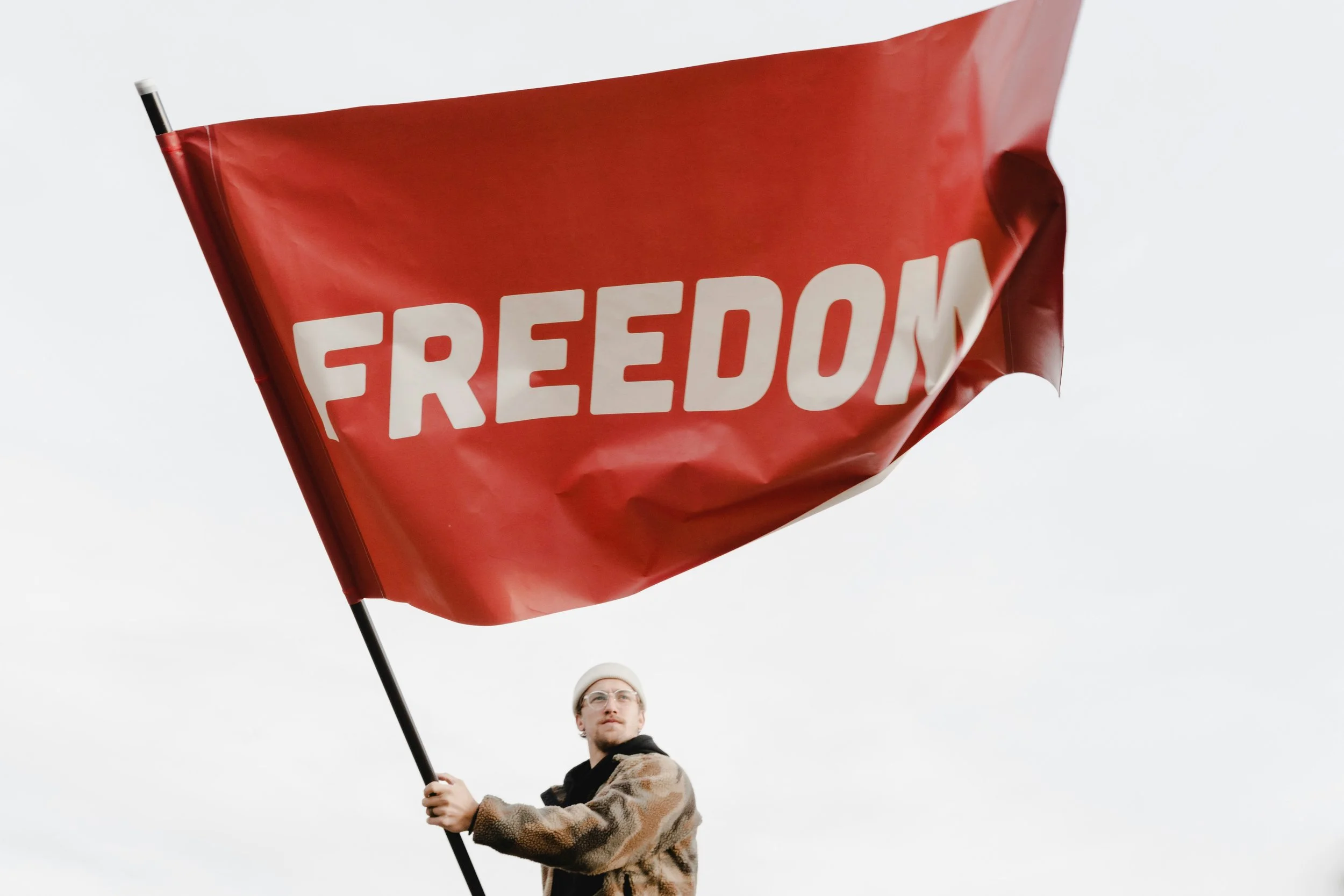
What Are You Free For?
There is a question that does not get asked nearly enough in conversations about faith and freedom: not "what are you free from?" but "what are you free for?" Most of us understand, at least in part, that the gospel offers liberation. Liberation from guilt, from shame, from the crushing weight of trying to earn what can never be earned. But freedom is never just an absence of something. It is always an invitation toward something.
Romans 12 is where the apostle Paul makes that invitation unmistakably clear.
The Foundation Beneath the Call
Paul opens Romans 12 with a single word that demands attention: "therefore." It is a hinge word, a word that swings the entire letter in a new direction. Everything Paul is about to say rests on everything he has already said. Eleven chapters of theology, mercy, grace, and the relentless pursuit of God toward humanity all funnel into this moment.
In view of God's mercy, Paul writes, offer yourselves.
That phrase, "in view of God's mercy," is not decorative. It is load-bearing. The Christian life does not begin with what we do for God. It begins with what He has already done for us. We were sinners, and He came anyway. We rejected Him, and He pursued anyway. We tried to manufacture our own righteousness, and He provided it freely through faith. We were slaves to sin, and He set us free. Not someday. Not conditionally. Now, and completely.
That is the foundation. And it matters enormously, because without it, everything that follows in Romans 12 starts to feel like a burden rather than a response. Obedience divorced from grace becomes religion. Obedience rooted in grace becomes worship.

Living in the Freedom Christ Offers: A Year of Breakthrough
What does it truly mean to be free? When we think about freedom, our minds might drift to national independence, personal autonomy, or the ability to make our own choices. But there's a deeper, more profound freedom available to us—one that transforms every aspect of our existence.
Jesus declared something revolutionary: "If the Son sets you free, you will be free indeed." This isn't just poetic language or religious rhetoric. It's an invitation into a completely different way of living, where the chains that have held us back—spiritually, mentally, emotionally, and even financially—can finally fall away.