
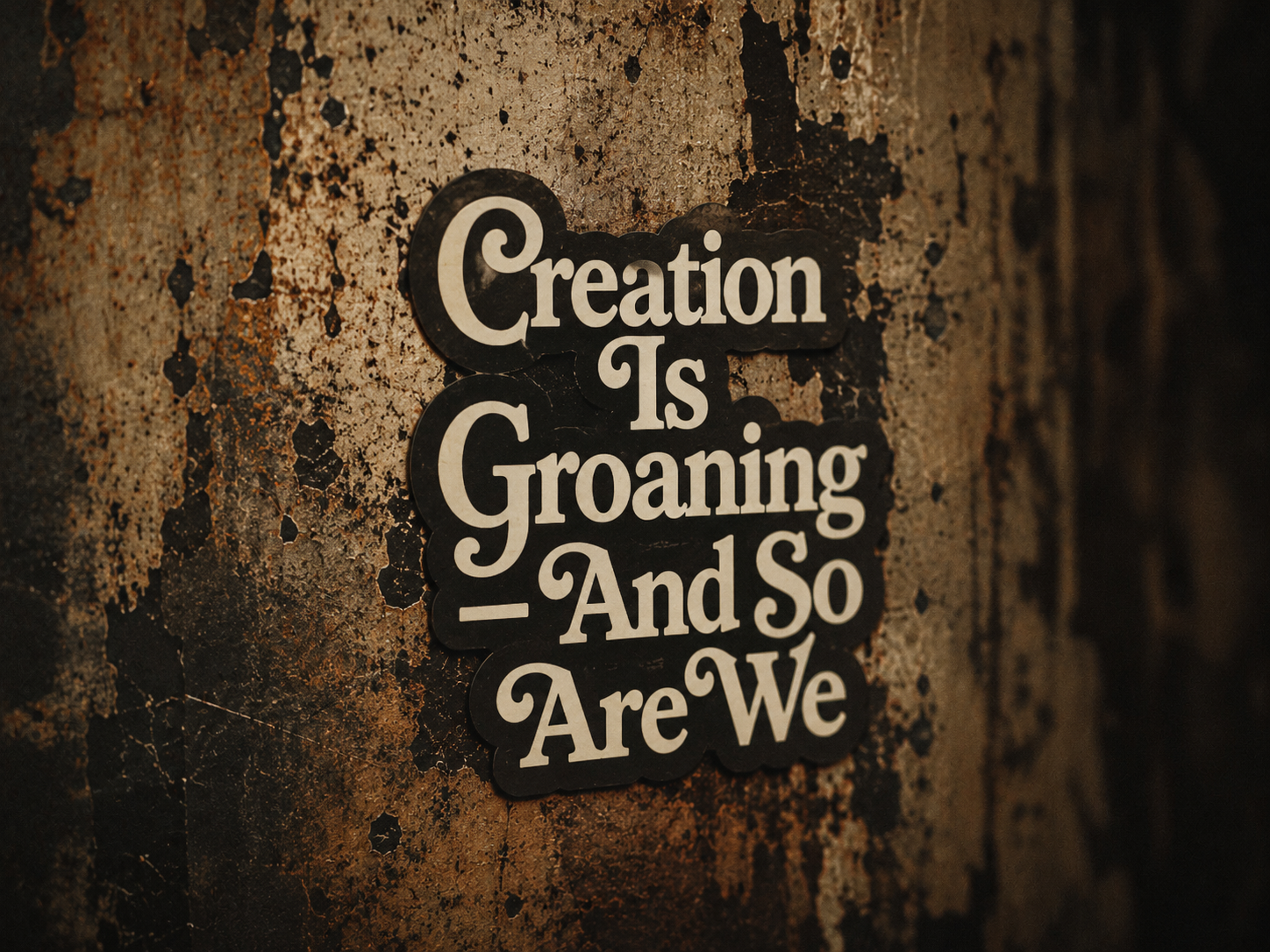
Creation Is Groaning — And So Are We
There is something deep within the human spirit that refuses to accept the world as it is. We build systems, pass laws, develop technologies, accumulate wealth, and pursue perfect health — all in the relentless pursuit of getting things right. Philosophers have called this dream "utopia," an imaginary place where laws are flawless, citizens are happy, and life is ideal. And yet, every attempt to build it collapses under the weight of the same problem: people are in it. Somewhere along the way, someone takes advantage, someone grasps for power, and the dream unravels.
This is not a political observation. It is a spiritual one. The hunger for a perfectly ordered world is not a flaw in our thinking — it is a signal. Something in us knows the world was meant to be different. Something in us remembers, even if only faintly, that things were once good.
In the Beginning, It Was Good
The opening pages of Genesis describe a world that was not just functional but genuinely good. God created the earth, filled it with life, and placed human beings within it as image-bearers — partners in cultivating, stewarding, and ruling over creation. There was purpose. There was meaning. There was harmony between God and humanity, between humanity and the earth. Heaven and earth were not distant from one another. God dwelled with His people in His good creation.
Then came the rebellion. Adam and Eve turned away from God, and in that turning, everything fractured. Death entered. Disease followed. Violence erupted — Cain killing his own brother over an offering. Relationships broke. Creation itself came under a curse. The world that was designed for flourishing began to decay.
And here we are, thousands of years later, still feeling that fracture in our bones.

Breaking Free: When Light Transforms Darkness
Have you ever felt trapped by your past? Bound by labels others have placed on you? Condemned by circumstances beyond your control? The story of a man born blind in John chapter 9 reveals a powerful truth: when we encounter the Light of the World, everything changes.
The Burden of False Accusations
Imagine living your entire life in darkness, not just the physical darkness of blindness, but the crushing weight of condemnation. This man in John 9 carried a double burden—he couldn't see, and everyone around him believed his condition was punishment for sin.
"Rabbi, who sinned, this man or his parents, that he was born blind?" the disciples asked Jesus.
Can you imagine the torment this family endured? Every day, whispers and accusations followed them. The father and mother carried guilt for a son's blindness they didn't cause. The son grew up believing he was cursed, marked by divine judgment before he could even walk.
But Jesus shattered this lie with one powerful statement: "Neither this man nor his parents sinned, but this happened so that the works of God might be displayed in him."

The Sacred Table: Rediscovering the Power of Communion
In a world filled with rituals that have lost their meaning, there exists one practice that has the power to transform us completely—if only we would approach it with the reverence it deserves. Communion, the Lord's Supper, the Eucharist—whatever name we know it by—this sacred moment was never meant to be a meaningless add-on to our spiritual lives. It was designed to be a living encounter with Jesus himself.
When the Extraordinary Becomes Ordinary
Somewhere along the journey of church history, we've allowed something extraordinary to become ordinary. We get excited about worship music, anticipate powerful sermons, but when it comes to communion, we often approach it with casual indifference. We go through the motions, our hearts disconnected, our minds wandering.
Yet consider this: Jesus himself, knowing everything that awaited him—the betrayal, the suffering, the cross—said with deep emotion, "I have eagerly desired to eat this Passover with you before I suffer." With everything ahead of him, his desire was to sit at the table with his people. That should stop us in our tracks.
The early church understood something we've forgotten. Their gatherings revolved around the Lord's table. They didn't view communion as something to squeeze into a service; it was the center of their worship. They believed Jesus was truly present among them, that they weren't just remembering him but actually communing with him.