

What Is Life Forming You Into?
There is a question worth sitting with today, one that cuts past the surface of daily routine and reaches into the deeper current of who you are becoming: What is life forming you into?
The longer we live, the more clearly we see a pattern emerge in the people around us. Some grow harder over time. Each disappointment, each betrayal, each unmet expectation adds another layer of armor until the person inside becomes difficult to reach. Others, somehow, grow softer. More patient. More willing to forgive. More genuinely loving toward the very people who are easiest to write off. The difference between these two trajectories is not circumstance. It is something far more intentional.
The Egg and the Armor We Build
Think back to the classic science class egg drop experiment. You are handed a raw egg and a pile of supplies, and your job is to protect it from the fall. You wrap it, reinforce it, cushion it from every angle. The goal is survival.
Many of us have done the same thing with our hearts.
Life happens. Someone says something cruel. A friendship collapses. A wound goes unaddressed and quietly hardens into bitterness. A disappointment piles on top of another until we stop expecting anything good. And slowly, without even realizing it, we build layer after layer around ourselves to make sure nothing can crack us open again.
The problem is that all that protective scaffolding does not actually protect us. It isolates us. It keeps out the hurt, yes, but it also keeps out the love. It keeps us from being fully known, and therefore from being fully loved. And it keeps us from extending genuine love to anyone else.
God calls us to something entirely different.
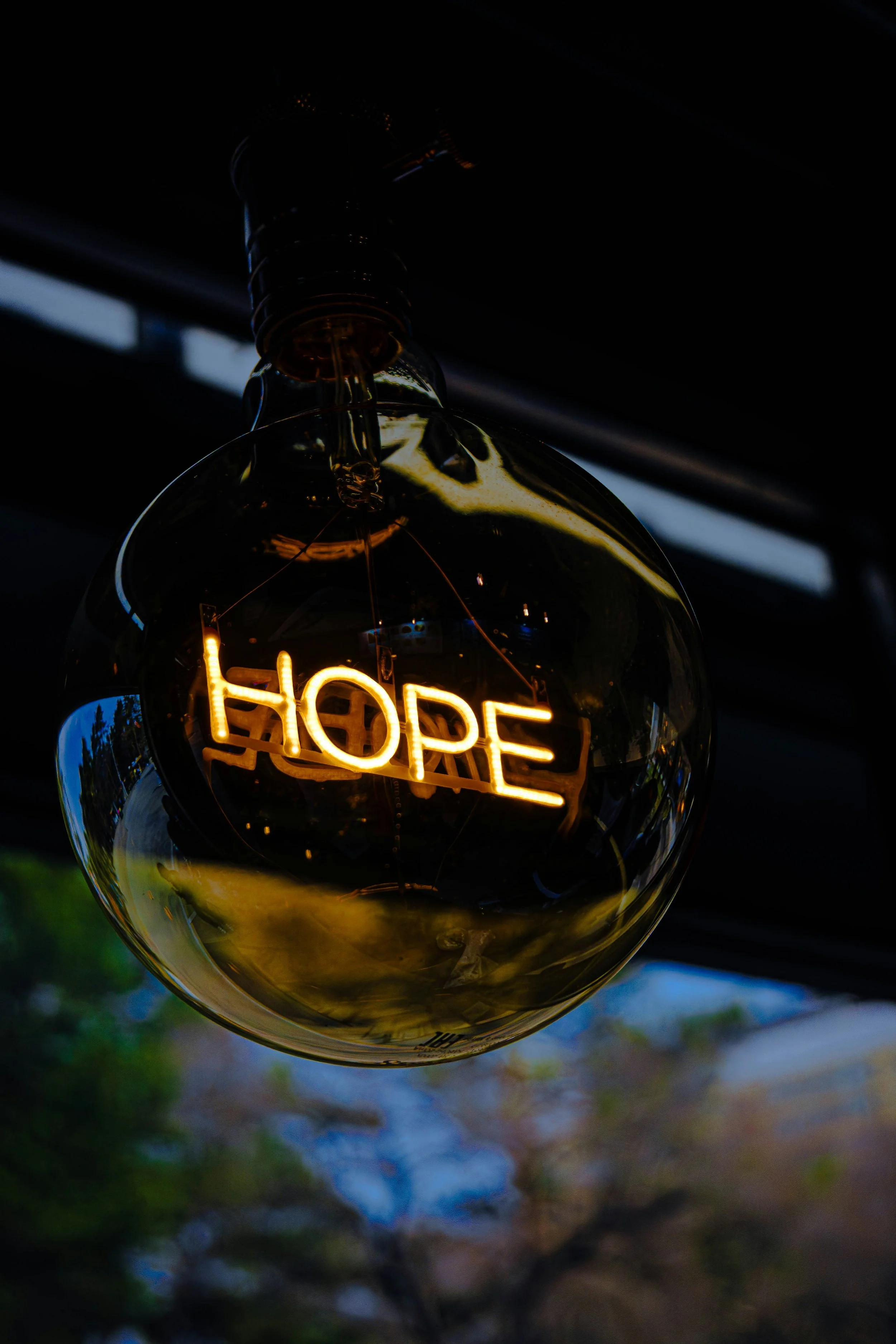
Hope That Holds: Finding God in the Middle of Suffering
Suffering is not a detour from the Christian life. It is part of the road itself.
That is not the message most of us want to hear. We want a faith that smooths out the rough places, that keeps the storms at bay and guarantees comfortable outcomes. But the ancient letter of Paul to the church in Rome, written roughly twenty years after the death and resurrection of Jesus, tells us something far more honest and, ultimately, far more powerful: suffering is woven into the fabric of following Christ. And because of that, it does not have to destroy us.
The question is not whether we will suffer. The question is what we will do with it when it comes.
Suffering as Identification with Christ
Romans 8:17 describes believers as co-heirs with Christ, sharing in his sufferings so that we may also share in his glory. The original Greek word for "suffer with" carries the meaning of experiencing pain jointly. This is not a cold legal transaction. It is an invitation into intimacy.
Think about what it means to truly know someone. You can hear stories about a person, look at photographs, read about their life. But there is a depth of knowing that only comes through shared experience. When we enter into our own suffering and look for Christ in the middle of it, we come to understand something about Jesus that no mountaintop moment can teach us. He is described in Isaiah 53 as a man of sorrows, acquainted with grief. We do not fully grasp that dimension of who he is until we have walked through grief ourselves.
This reframes everything. Suffering is not evidence that God has abandoned you. It is an opportunity to know him in a way you never could otherwise.
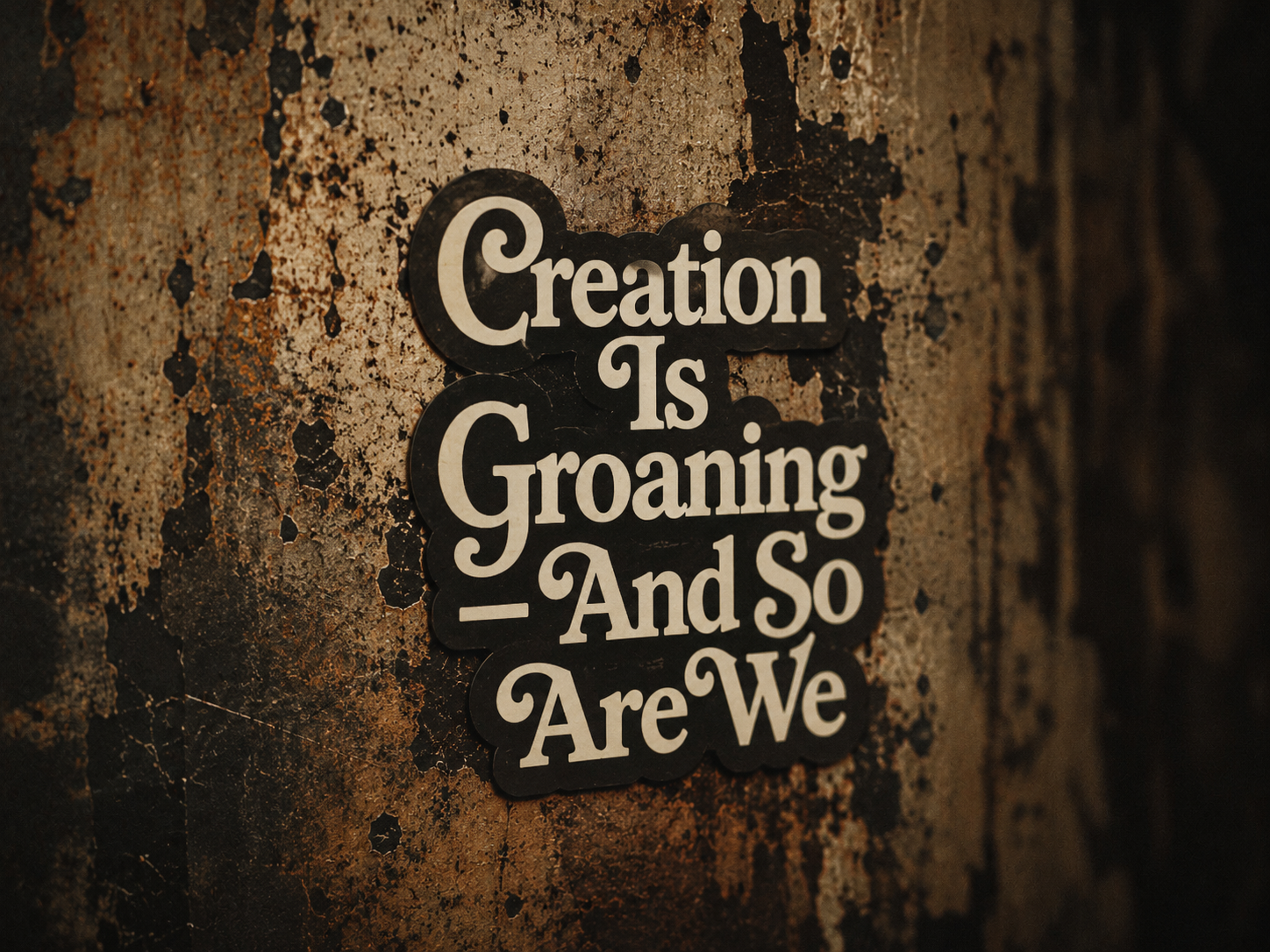
Creation Is Groaning — And So Are We
There is something deep within the human spirit that refuses to accept the world as it is. We build systems, pass laws, develop technologies, accumulate wealth, and pursue perfect health — all in the relentless pursuit of getting things right. Philosophers have called this dream "utopia," an imaginary place where laws are flawless, citizens are happy, and life is ideal. And yet, every attempt to build it collapses under the weight of the same problem: people are in it. Somewhere along the way, someone takes advantage, someone grasps for power, and the dream unravels.
This is not a political observation. It is a spiritual one. The hunger for a perfectly ordered world is not a flaw in our thinking — it is a signal. Something in us knows the world was meant to be different. Something in us remembers, even if only faintly, that things were once good.
In the Beginning, It Was Good
The opening pages of Genesis describe a world that was not just functional but genuinely good. God created the earth, filled it with life, and placed human beings within it as image-bearers — partners in cultivating, stewarding, and ruling over creation. There was purpose. There was meaning. There was harmony between God and humanity, between humanity and the earth. Heaven and earth were not distant from one another. God dwelled with His people in His good creation.
Then came the rebellion. Adam and Eve turned away from God, and in that turning, everything fractured. Death entered. Disease followed. Violence erupted — Cain killing his own brother over an offering. Relationships broke. Creation itself came under a curse. The world that was designed for flourishing began to decay.
And here we are, thousands of years later, still feeling that fracture in our bones.