

Living Wide Awake: Freedom, Love, and Urgency in a Complicated World
There is a question that quietly follows every person who has ever received grace: now what?
The relief of forgiveness is real. The weight lifted from a life that once carried condemnation is genuine and profound. But grace was never meant to be a destination. It was always meant to be a starting line. And the starting line leads somewhere — into the streets, into the neighborhoods, into the ordinary moments of everyday life where the kingdom of God either shows up or it does not.
Romans 13 presses hard on this question. It refuses to let us settle into spiritual comfort. Instead, it lays out a vision for what it looks like to live freely in God while still living fully in the world — a world with governments, neighbors, debts, and a clock that is ticking.
Authority Was Never the Enemy
The first thing Romans 13 does is go somewhere unexpected. It talks about government. Not in a way that is partisan or politically charged, but in a way that reframes the entire conversation. Every governing authority that exists, Paul says in Romans 13:1-2, has been established by God. Not because every ruler is righteous, but because God is sovereign over all of it.
This was written while Nero was Caesar. Let that sink in. The man who would later murder family members and reportedly blame Christians for the burning of Rome was on the throne when Paul wrote that governing authorities are established by God. Paul's confidence was not in the goodness of the ruler. It was in the sovereignty of the God who rules over all rulers.
This matters because it reorients where we place our hope. Government is not our savior. It never was. Its purpose, as described throughout Scripture, is to cultivate good and to punish evil — to protect its citizens and restrain wrongdoing. It does this imperfectly, because it is made up of imperfect people. But when we expect government to fulfill what only God can fulfill, we will always be disappointed, and we will always be distracted from the actual work we are called to do.
The call for believers is to submit where we can, to honor those in authority, to pay what we owe, and to pray for those who lead. And when human authority directly contradicts God's authority — as it did for Daniel, for the Hebrew midwives, for the early disciples who refused to stop speaking in the name of Jesus — God's authority is the one we follow, even knowing there may be a cost for doing so.
The point is not blind obedience. The point is a rightly ordered life in which God sits at the top and everything else finds its proper place beneath him.

What Does It Actually Mean to Love Like Jesus?
Love is one of the most talked-about topics in the world, and yet it remains one of the most misunderstood. We throw the word around casually, attach it to preferences and feelings, and quietly reserve it for the people who make it easy. But what if genuine love — the kind that transforms communities, disarms enemies, and reflects the heart of God — looks radically different from what we have settled for?
Romans 12:9-21 lays out one of the most challenging and practical pictures of love found anywhere in Scripture. It is not a soft, sentimental portrait. It is a call to something costly, something counter-cultural, and ultimately something that is only possible through the power of God working in us.
Love Without a Mask
Paul opens with a striking command: let love be sincere. The Greek word he uses literally means without hypocrisy. In the ancient world, the word hypocrite was borrowed from the theater, where actors would hold up masks to portray different characters. Paul is essentially saying, do not wear a mask of love while hiding something entirely different underneath.
This is a word that cuts deep. It is possible to say the right things, smile at the right moments, and still harbor bitterness, jealousy, or contempt beneath the surface. Hypocritical love is transactional — it gives in order to receive. It is conditional — it extends warmth only to those who agree, who behave, who belong to the right group. It is situational — it shows up when convenient and disappears when things get hard.
The contrast Paul draws is the agape love of God. This is not the romantic love of eros, nor the friendship love of philia, nor the family affection of storge. Agape is selfless, sacrificial, and unconditional. It is not primarily driven by emotion or attraction, but by will and commitment — choosing to act for someone else's good regardless of what comes back in return. This is the love God demonstrated when He gave Himself for us. And it is the love He calls us to walk in daily.
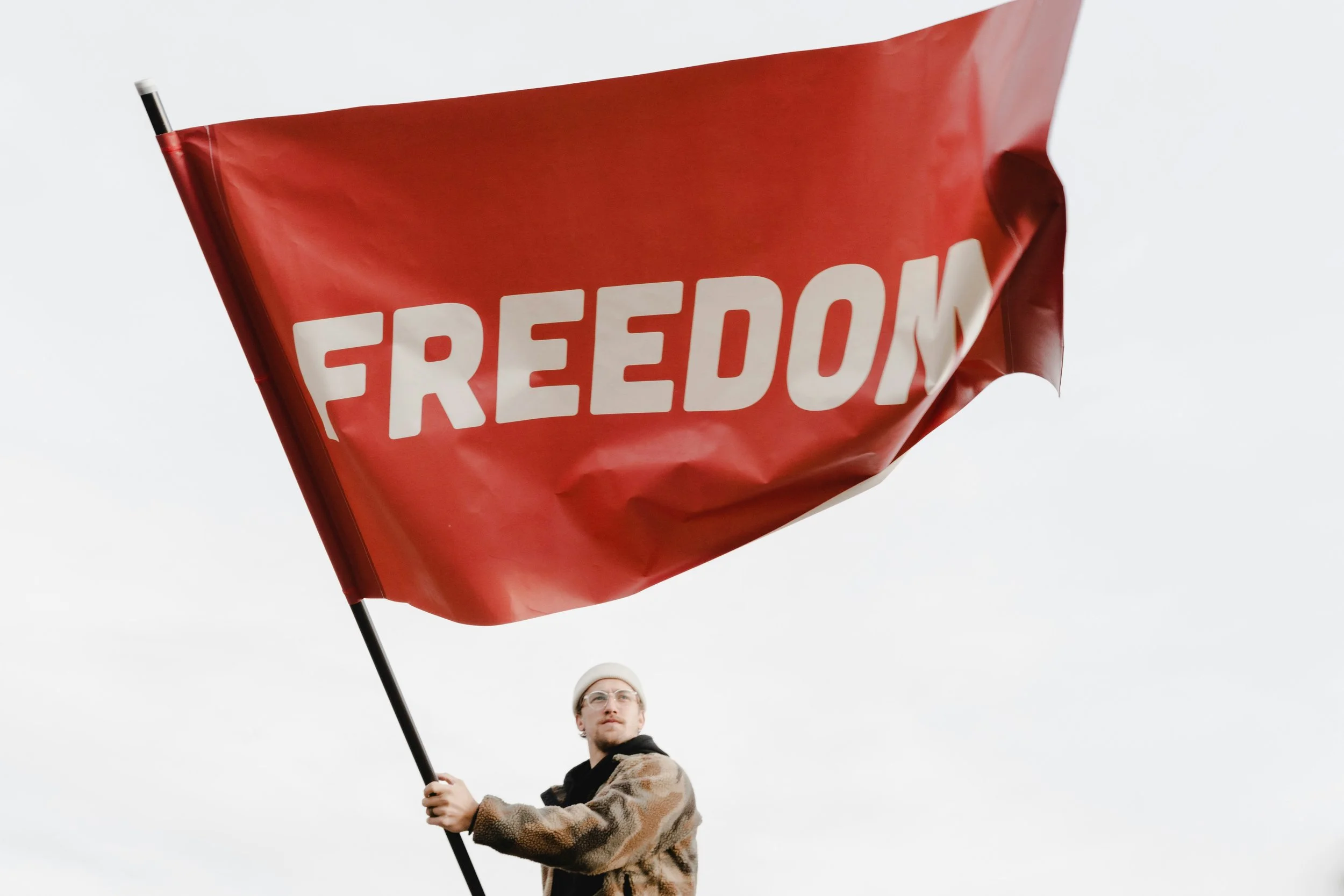
What Are You Free For?
There is a question that does not get asked nearly enough in conversations about faith and freedom: not "what are you free from?" but "what are you free for?" Most of us understand, at least in part, that the gospel offers liberation. Liberation from guilt, from shame, from the crushing weight of trying to earn what can never be earned. But freedom is never just an absence of something. It is always an invitation toward something.
Romans 12 is where the apostle Paul makes that invitation unmistakably clear.
The Foundation Beneath the Call
Paul opens Romans 12 with a single word that demands attention: "therefore." It is a hinge word, a word that swings the entire letter in a new direction. Everything Paul is about to say rests on everything he has already said. Eleven chapters of theology, mercy, grace, and the relentless pursuit of God toward humanity all funnel into this moment.
In view of God's mercy, Paul writes, offer yourselves.
That phrase, "in view of God's mercy," is not decorative. It is load-bearing. The Christian life does not begin with what we do for God. It begins with what He has already done for us. We were sinners, and He came anyway. We rejected Him, and He pursued anyway. We tried to manufacture our own righteousness, and He provided it freely through faith. We were slaves to sin, and He set us free. Not someday. Not conditionally. Now, and completely.
That is the foundation. And it matters enormously, because without it, everything that follows in Romans 12 starts to feel like a burden rather than a response. Obedience divorced from grace becomes religion. Obedience rooted in grace becomes worship.