

What Is Life Forming You Into?
There is a question worth sitting with today, one that cuts past the surface of daily routine and reaches into the deeper current of who you are becoming: What is life forming you into?
The longer we live, the more clearly we see a pattern emerge in the people around us. Some grow harder over time. Each disappointment, each betrayal, each unmet expectation adds another layer of armor until the person inside becomes difficult to reach. Others, somehow, grow softer. More patient. More willing to forgive. More genuinely loving toward the very people who are easiest to write off. The difference between these two trajectories is not circumstance. It is something far more intentional.
The Egg and the Armor We Build
Think back to the classic science class egg drop experiment. You are handed a raw egg and a pile of supplies, and your job is to protect it from the fall. You wrap it, reinforce it, cushion it from every angle. The goal is survival.
Many of us have done the same thing with our hearts.
Life happens. Someone says something cruel. A friendship collapses. A wound goes unaddressed and quietly hardens into bitterness. A disappointment piles on top of another until we stop expecting anything good. And slowly, without even realizing it, we build layer after layer around ourselves to make sure nothing can crack us open again.
The problem is that all that protective scaffolding does not actually protect us. It isolates us. It keeps out the hurt, yes, but it also keeps out the love. It keeps us from being fully known, and therefore from being fully loved. And it keeps us from extending genuine love to anyone else.
God calls us to something entirely different.

When Everything Feels Like It Is Falling Apart: Is God Still For You?
There is a question that most people, at some point in their lives, find themselves asking in the quiet moments — when the diagnosis comes back with bad news, when the marriage begins to unravel, when the job disappears, when grief settles in like a weight that will not lift. The question is simple, but it cuts deep: Is God against me?
It is a question born out of pain, not rebellion. When life presses hard enough, even the most faithful person can find themselves wondering whether God has turned his back, whether something they did has caused him to withdraw his love, whether their salvation is even real. If you have ever been there, you are not alone. And more importantly, there is an answer.
Romans chapter 8, beginning at verse 31, speaks directly into that question with a boldness that is almost startling. The apostle Paul, writing to believers who knew suffering well, does not offer platitudes or easy comfort. He offers something far more durable: a case built on what God has actually done.
Since God Is For Us
Paul opens with a declaration that has become one of the most quoted phrases in all of Scripture. He asks who can be against us if God is for us. But it is worth pausing on the word "if." In the original language, this word does not carry doubt. It carries certainty. A better reading might be: since God is for us, who can be against us?
This is not a promise that life will be smooth or that opposition will disappear. The word "against" in this context carries the idea of working against us to our undoing — to overturn or unravel what God has done. Paul is making the point that no force in existence can undo what God has accomplished in redeeming a person. The salvation God gives is not fragile. It does not depend on our ability to hold on. As Philippians 1:6 reminds us, the one who began a good work in us will be faithful to carry it through to completion.
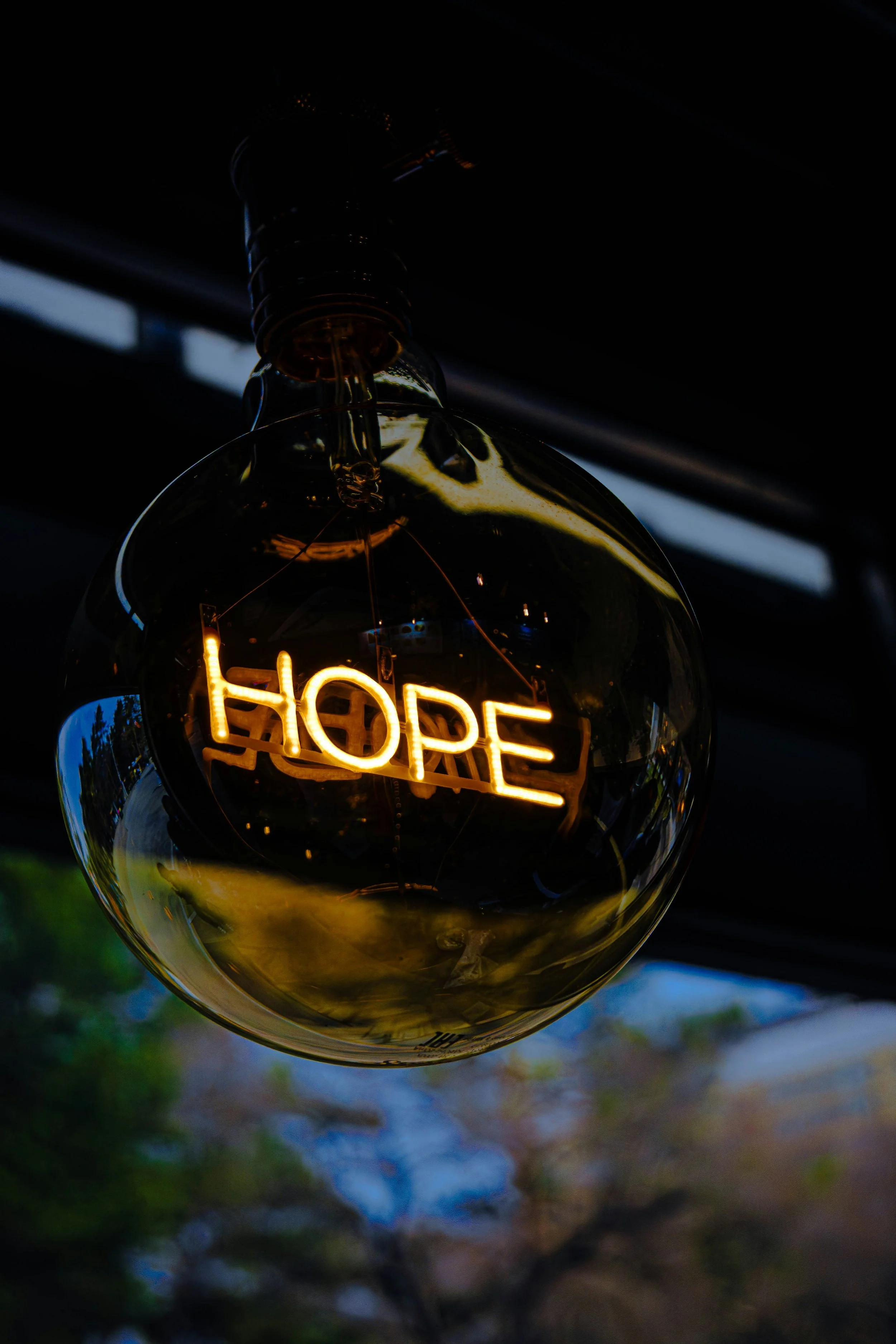
Hope That Holds: Finding God in the Middle of Suffering
Suffering is not a detour from the Christian life. It is part of the road itself.
That is not the message most of us want to hear. We want a faith that smooths out the rough places, that keeps the storms at bay and guarantees comfortable outcomes. But the ancient letter of Paul to the church in Rome, written roughly twenty years after the death and resurrection of Jesus, tells us something far more honest and, ultimately, far more powerful: suffering is woven into the fabric of following Christ. And because of that, it does not have to destroy us.
The question is not whether we will suffer. The question is what we will do with it when it comes.
Suffering as Identification with Christ
Romans 8:17 describes believers as co-heirs with Christ, sharing in his sufferings so that we may also share in his glory. The original Greek word for "suffer with" carries the meaning of experiencing pain jointly. This is not a cold legal transaction. It is an invitation into intimacy.
Think about what it means to truly know someone. You can hear stories about a person, look at photographs, read about their life. But there is a depth of knowing that only comes through shared experience. When we enter into our own suffering and look for Christ in the middle of it, we come to understand something about Jesus that no mountaintop moment can teach us. He is described in Isaiah 53 as a man of sorrows, acquainted with grief. We do not fully grasp that dimension of who he is until we have walked through grief ourselves.
This reframes everything. Suffering is not evidence that God has abandoned you. It is an opportunity to know him in a way you never could otherwise.