

What About Israel? Faith, Proximity, and the Heart of God
There is a prayer that cuts through theological complexity, cultural noise, and the weight of unanswered questions. It is short, honest, and desperately needed: Lord, increase my faith. It is the prayer of someone who recognizes that what God is doing in the world is bigger than any single perspective can contain. And it is the prayer that must anchor us as we wrestle with one of the most profound and often avoided questions in the Christian faith: what is God doing with the people of Israel?
This is not a question reserved for scholars or political commentators. It is a question that lives at the heart of the book of Romans, and it demands something from every person who claims to follow Jesus.
Reading Scripture With New Eyes
For many Western Christians, the book of Romans has been read through a narrow lens, pulled apart into memorable verses and memorized passages, stripped of its original context and audience. But Romans was written to both Jews and Gentiles, and chapters 9, 10, and 11 deal specifically with a question that Paul could not stop wrestling with: why have so many of God's chosen people rejected the Messiah they were promised?
Paul makes his heart plain in Romans 10, where he expresses his deep longing that Israel would be saved. He acknowledges their zeal for God, while also recognizing that their pursuit of righteousness had become about works rather than faith. And here is the stunning thing Paul argues: it was always supposed to be about faith. Even the law, even the promises given to Moses, pointed toward a righteousness received not by human effort but by trust in God.
The righteousness that Paul describes in Romans 10 is breathtakingly simple. Declare with your mouth that Jesus is Lord. Believe in your heart that God raised him from the dead. That is the path of salvation, and it is the same path for every human being, Jew or Gentile alike. There is no difference in how grace is received. The same Lord is Lord of all.
The Question of "They"
One of the most clarifying moments in reading Romans 10 carefully is noticing a single repeated word: they. How can they hear without someone telling them? How can they believe without hearing? How can anyone preach unless they are sent? And then, almost immediately, Paul pivots back to Israel specifically.
The answer to who "they" refers to is both general and specific. There is a universal truth about how the gospel spreads through proclamation, through sent messengers, through people willing to carry good news into unfamiliar places. But there is also a specific application: Israel has heard, and yet many have not believed. And still, God has not withdrawn his hand. The image Paul leaves us with is striking. All day long, God has held out his hands to a disobedient and obstinate people. Not past tense. Not a closed chapter. All day long.
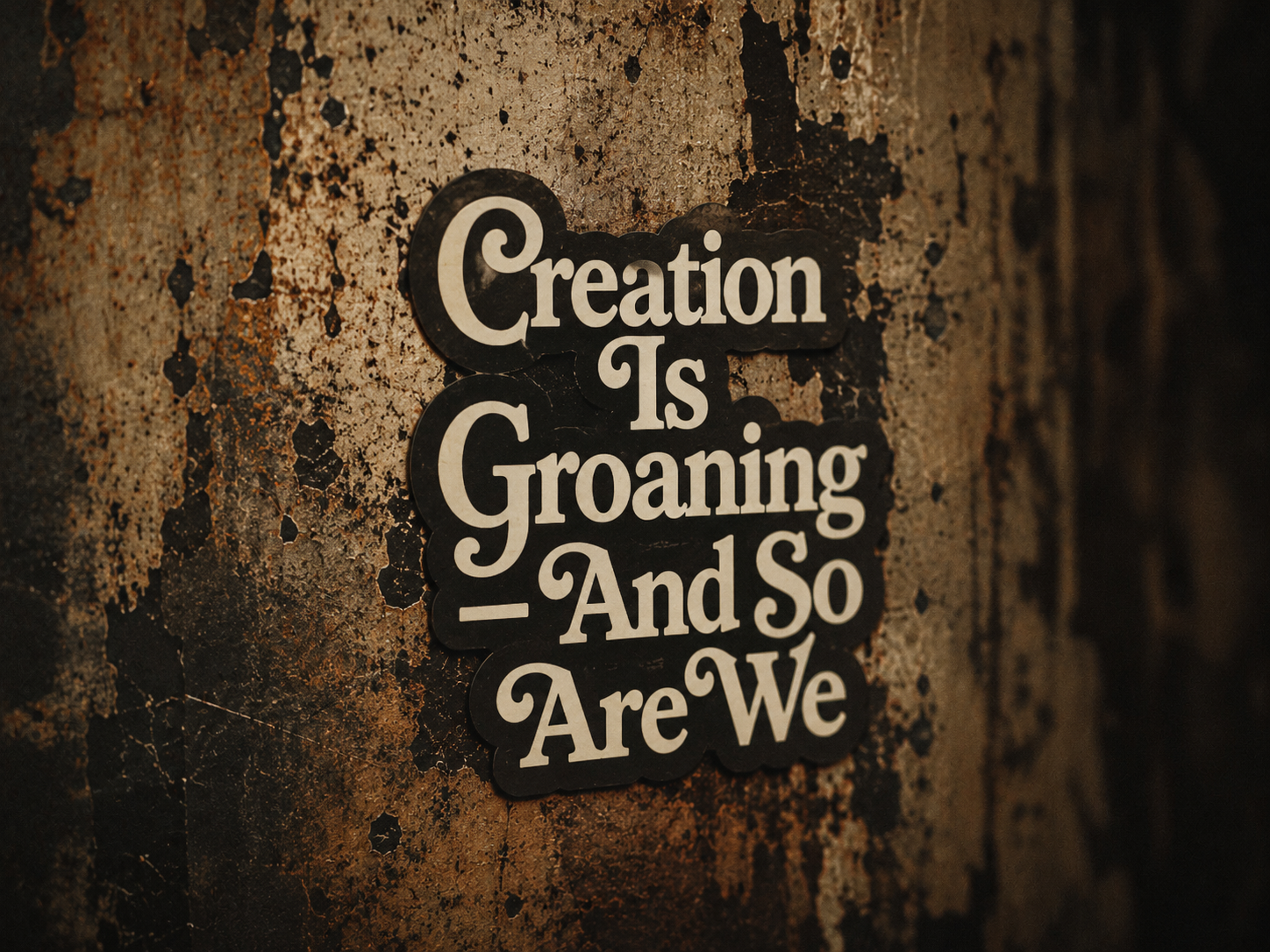
Creation Is Groaning — And So Are We
There is something deep within the human spirit that refuses to accept the world as it is. We build systems, pass laws, develop technologies, accumulate wealth, and pursue perfect health — all in the relentless pursuit of getting things right. Philosophers have called this dream "utopia," an imaginary place where laws are flawless, citizens are happy, and life is ideal. And yet, every attempt to build it collapses under the weight of the same problem: people are in it. Somewhere along the way, someone takes advantage, someone grasps for power, and the dream unravels.
This is not a political observation. It is a spiritual one. The hunger for a perfectly ordered world is not a flaw in our thinking — it is a signal. Something in us knows the world was meant to be different. Something in us remembers, even if only faintly, that things were once good.
In the Beginning, It Was Good
The opening pages of Genesis describe a world that was not just functional but genuinely good. God created the earth, filled it with life, and placed human beings within it as image-bearers — partners in cultivating, stewarding, and ruling over creation. There was purpose. There was meaning. There was harmony between God and humanity, between humanity and the earth. Heaven and earth were not distant from one another. God dwelled with His people in His good creation.
Then came the rebellion. Adam and Eve turned away from God, and in that turning, everything fractured. Death entered. Disease followed. Violence erupted — Cain killing his own brother over an offering. Relationships broke. Creation itself came under a curse. The world that was designed for flourishing began to decay.
And here we are, thousands of years later, still feeling that fracture in our bones.

Living Free: The Spirit's Power to Transform Your Life
There's a profound truth that changes everything: there is now no condemnation for those who are in Christ Jesus. These words from Romans 8 aren't just theological comfort—they're an invitation to live in complete freedom.
The Weight of Condemnation vs. The Freedom of Conviction
Many of us carry burdens we were never meant to bear. We replay our failures on an endless loop, allowing past mistakes to define our present identity. But here's where we need to understand a critical distinction: the enemy condemns, but the Holy Spirit convicts.
Condemnation attacks your identity. It whispers that you're worthless, broken beyond repair, a failure who will never change. It says, "You ARE this mistake." Condemnation keeps you trapped in shame, hiding in darkness, convinced that even Jesus' sacrifice couldn't cover what you've done.
Conviction, however, works differently. The Holy Spirit points to specific behaviors that need to change, but always with hope attached. Conviction says, "That action was wrong—let's make it right." It leads to repentance, restoration, and renewed intimacy with God and others.
Consider the difference: If you speak harshly to someone you love, condemnation says, "You're a terrible person who always hurts people." Conviction says, "That was hurtful—you need to apologize and seek forgiveness." One destroys; the other restores.
When you accepted Christ, every part of your life—past, present, and future—was covered by His blood. Your record was made clean. Not partially. Not temporarily. Completely. The verdict has already been rendered: not guilty. You don't need to earn what Jesus has already won for you.