

Living Wide Awake: Freedom, Love, and Urgency in a Complicated World
There is a question that quietly follows every person who has ever received grace: now what?
The relief of forgiveness is real. The weight lifted from a life that once carried condemnation is genuine and profound. But grace was never meant to be a destination. It was always meant to be a starting line. And the starting line leads somewhere — into the streets, into the neighborhoods, into the ordinary moments of everyday life where the kingdom of God either shows up or it does not.
Romans 13 presses hard on this question. It refuses to let us settle into spiritual comfort. Instead, it lays out a vision for what it looks like to live freely in God while still living fully in the world — a world with governments, neighbors, debts, and a clock that is ticking.
Authority Was Never the Enemy
The first thing Romans 13 does is go somewhere unexpected. It talks about government. Not in a way that is partisan or politically charged, but in a way that reframes the entire conversation. Every governing authority that exists, Paul says in Romans 13:1-2, has been established by God. Not because every ruler is righteous, but because God is sovereign over all of it.
This was written while Nero was Caesar. Let that sink in. The man who would later murder family members and reportedly blame Christians for the burning of Rome was on the throne when Paul wrote that governing authorities are established by God. Paul's confidence was not in the goodness of the ruler. It was in the sovereignty of the God who rules over all rulers.
This matters because it reorients where we place our hope. Government is not our savior. It never was. Its purpose, as described throughout Scripture, is to cultivate good and to punish evil — to protect its citizens and restrain wrongdoing. It does this imperfectly, because it is made up of imperfect people. But when we expect government to fulfill what only God can fulfill, we will always be disappointed, and we will always be distracted from the actual work we are called to do.
The call for believers is to submit where we can, to honor those in authority, to pay what we owe, and to pray for those who lead. And when human authority directly contradicts God's authority — as it did for Daniel, for the Hebrew midwives, for the early disciples who refused to stop speaking in the name of Jesus — God's authority is the one we follow, even knowing there may be a cost for doing so.
The point is not blind obedience. The point is a rightly ordered life in which God sits at the top and everything else finds its proper place beneath him.

The Sacred Table: Rediscovering the Power of Communion
In a world filled with rituals that have lost their meaning, there exists one practice that has the power to transform us completely—if only we would approach it with the reverence it deserves. Communion, the Lord's Supper, the Eucharist—whatever name we know it by—this sacred moment was never meant to be a meaningless add-on to our spiritual lives. It was designed to be a living encounter with Jesus himself.
When the Extraordinary Becomes Ordinary
Somewhere along the journey of church history, we've allowed something extraordinary to become ordinary. We get excited about worship music, anticipate powerful sermons, but when it comes to communion, we often approach it with casual indifference. We go through the motions, our hearts disconnected, our minds wandering.
Yet consider this: Jesus himself, knowing everything that awaited him—the betrayal, the suffering, the cross—said with deep emotion, "I have eagerly desired to eat this Passover with you before I suffer." With everything ahead of him, his desire was to sit at the table with his people. That should stop us in our tracks.
The early church understood something we've forgotten. Their gatherings revolved around the Lord's table. They didn't view communion as something to squeeze into a service; it was the center of their worship. They believed Jesus was truly present among them, that they weren't just remembering him but actually communing with him.
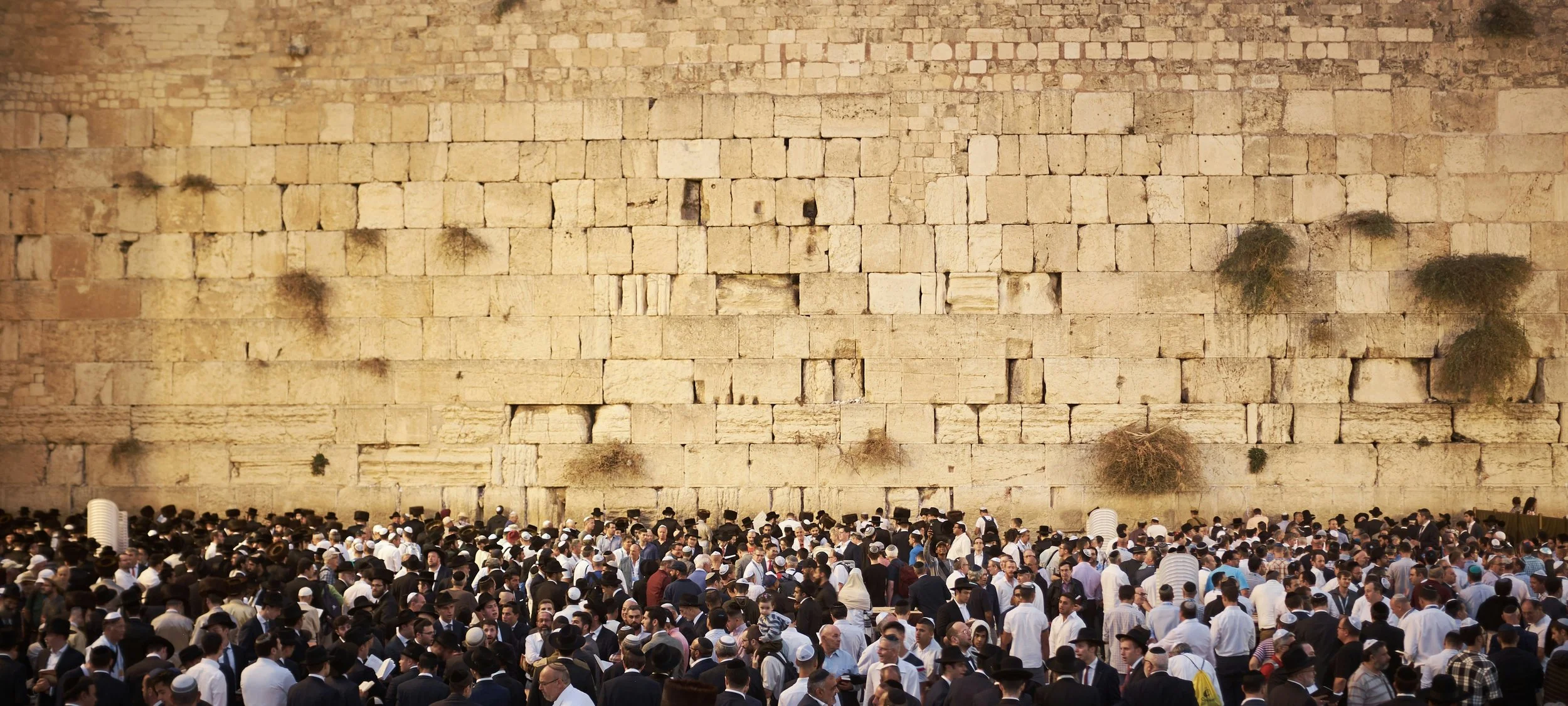
The Heartbeat of Jerusalem: Where Heaven Touches Earth
There's something magnetic about Jerusalem. A city that captures global attention far beyond its size or economic significance. Why does this ancient place stir such passion and controversy? Perhaps because Jerusalem is more than just a city - it's where the eternal touches the temporal, where heaven meets earth.
The Psalmist captures this allure beautifully: "How lovely are your dwelling places, O Lord of hosts! My soul longed and even yearned for the courts of the Lord." (Psalm 84:1-2) There's a divine drawing, a spiritual gravity that pulls hearts toward this sacred space.