
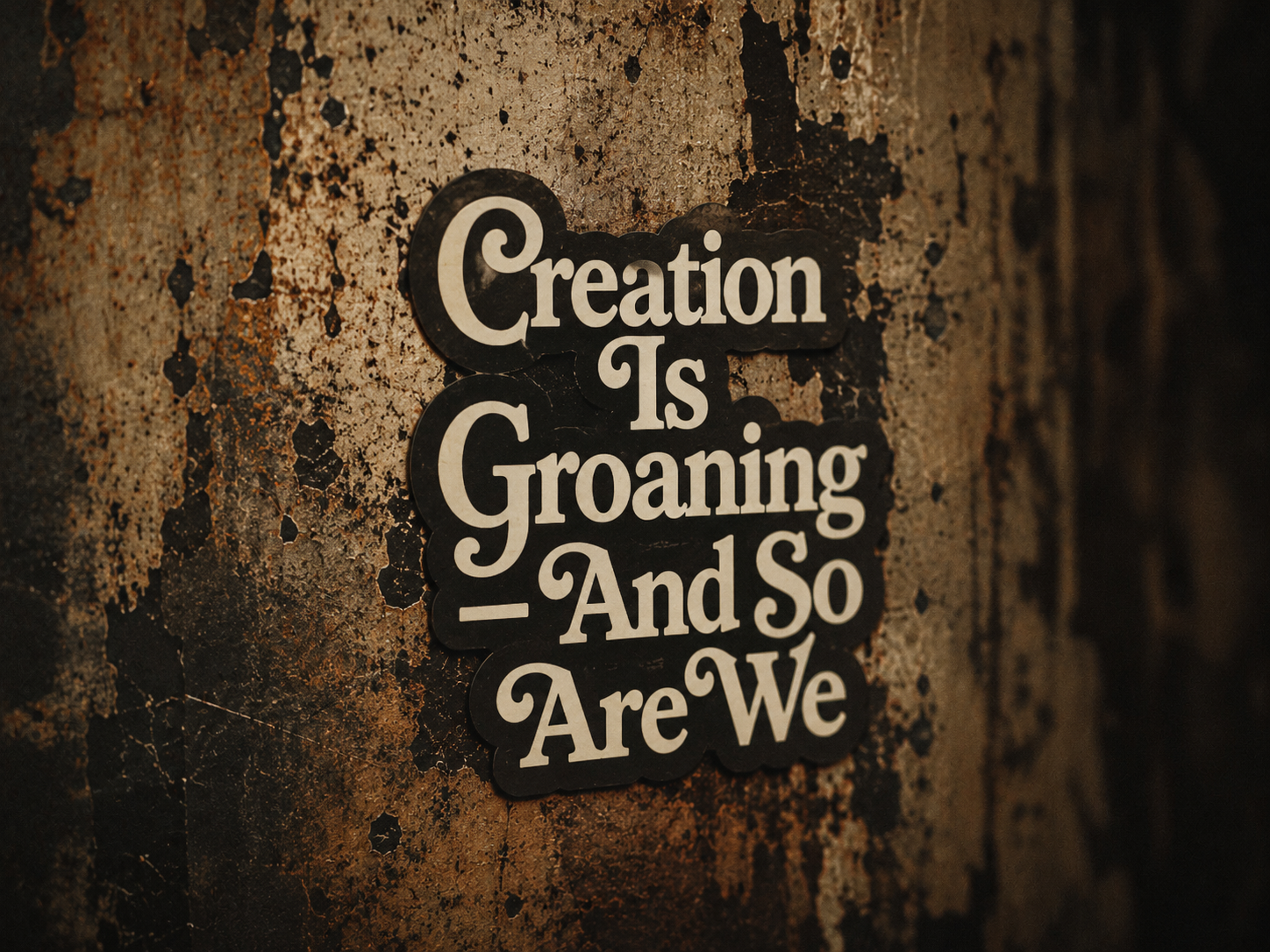
Creation Is Groaning — And So Are We
There is something deep within the human spirit that refuses to accept the world as it is. We build systems, pass laws, develop technologies, accumulate wealth, and pursue perfect health — all in the relentless pursuit of getting things right. Philosophers have called this dream "utopia," an imaginary place where laws are flawless, citizens are happy, and life is ideal. And yet, every attempt to build it collapses under the weight of the same problem: people are in it. Somewhere along the way, someone takes advantage, someone grasps for power, and the dream unravels.
This is not a political observation. It is a spiritual one. The hunger for a perfectly ordered world is not a flaw in our thinking — it is a signal. Something in us knows the world was meant to be different. Something in us remembers, even if only faintly, that things were once good.
In the Beginning, It Was Good
The opening pages of Genesis describe a world that was not just functional but genuinely good. God created the earth, filled it with life, and placed human beings within it as image-bearers — partners in cultivating, stewarding, and ruling over creation. There was purpose. There was meaning. There was harmony between God and humanity, between humanity and the earth. Heaven and earth were not distant from one another. God dwelled with His people in His good creation.
Then came the rebellion. Adam and Eve turned away from God, and in that turning, everything fractured. Death entered. Disease followed. Violence erupted — Cain killing his own brother over an offering. Relationships broke. Creation itself came under a curse. The world that was designed for flourishing began to decay.
And here we are, thousands of years later, still feeling that fracture in our bones.

The Gift You Cannot Earn: Understanding Righteousness Through Faith
There's something deeply uncomfortable about receiving a gift we know we don't deserve. When a friend insists on paying for dinner and won't let us contribute even the tip, we squirm. We want to do something, contribute somehow, prove we're not just taking advantage of their generosity.
This discomfort reveals something profound about human nature: we struggle to accept grace.
The Problem with Religious Performance
Throughout history, humanity has wrestled with a fundamental question: How do we stand righteous before a holy God? The natural human response is to try harder, do more, and achieve enough good works to tip the scales in our favor.
Various religious systems have offered their answers. Some say it's faith plus following certain rules. Others suggest you need to be hopefully good enough, and perhaps God will accept you. Still others propose a mixture of grace and works, as if God's gift needs our help to be complete.
But the message of Romans chapter 4 cuts through all this religious striving with a radical truth: righteousness cannot be earned. It can only be received.